News
Boeing and Carbonfuture Sign Multi-Year Agreement for at least 40,000 Tonnes of Durable Carbon Removal
Boeing and Carbonfuture Sign Multi-Year Agreement for at least 40,000 Tonnes of Durable Carbon Removal
Learn More


Trust underpins the carbon removal market.
Two decades of voluntary market activity have shown that quality varies widely and that uncertainty around project performance slows adoption.
Corporate buyers entering the carbon removal market today face a lack of transparency, unreliable or inconsistent project information, and uneven quality. Suppliers need that early confidence in their scientific and operational plans to secure financing and begin implementation.
For the market to scale to the levels required by climate science, that confidence must start upstream. Buyers need evidence that a project’s underlying science, operations, and financial structure are sound. Suppliers need a clear, structured way to demonstrate market readiness.
This is the role of due diligence. It is the first integrity checkpoint in the chain - before tracking, verification, and certification - providing early clarity on scientific validity, operational feasibility, financial soundness, and regulatory alignment. Rigorous due diligence reduces uncertainty for buyers and enables suppliers to demonstrate credibility, allowing capital to move, projects to scale, and high-quality carbon removal to grow as an investable market.
Our due diligence process is based on our quality framework and built around a structured review of each project.
More than 100 data points and over 30 proof points are collected and validated to ensure consistent and accurate reporting. This process looks at a project from multiple angles so that buyers and suppliers understand not only the carbon removal pathway, but also whether the project is prepared for long-term, responsible delivery.
To support consistency and clarity, the process incorporates clear expectations for evidence, recurring review points, and defined pathways for communicating findings to buyers and suppliers. This helps ensure that assessments remain transparent, repeatable, and responsive to evolving project conditions.
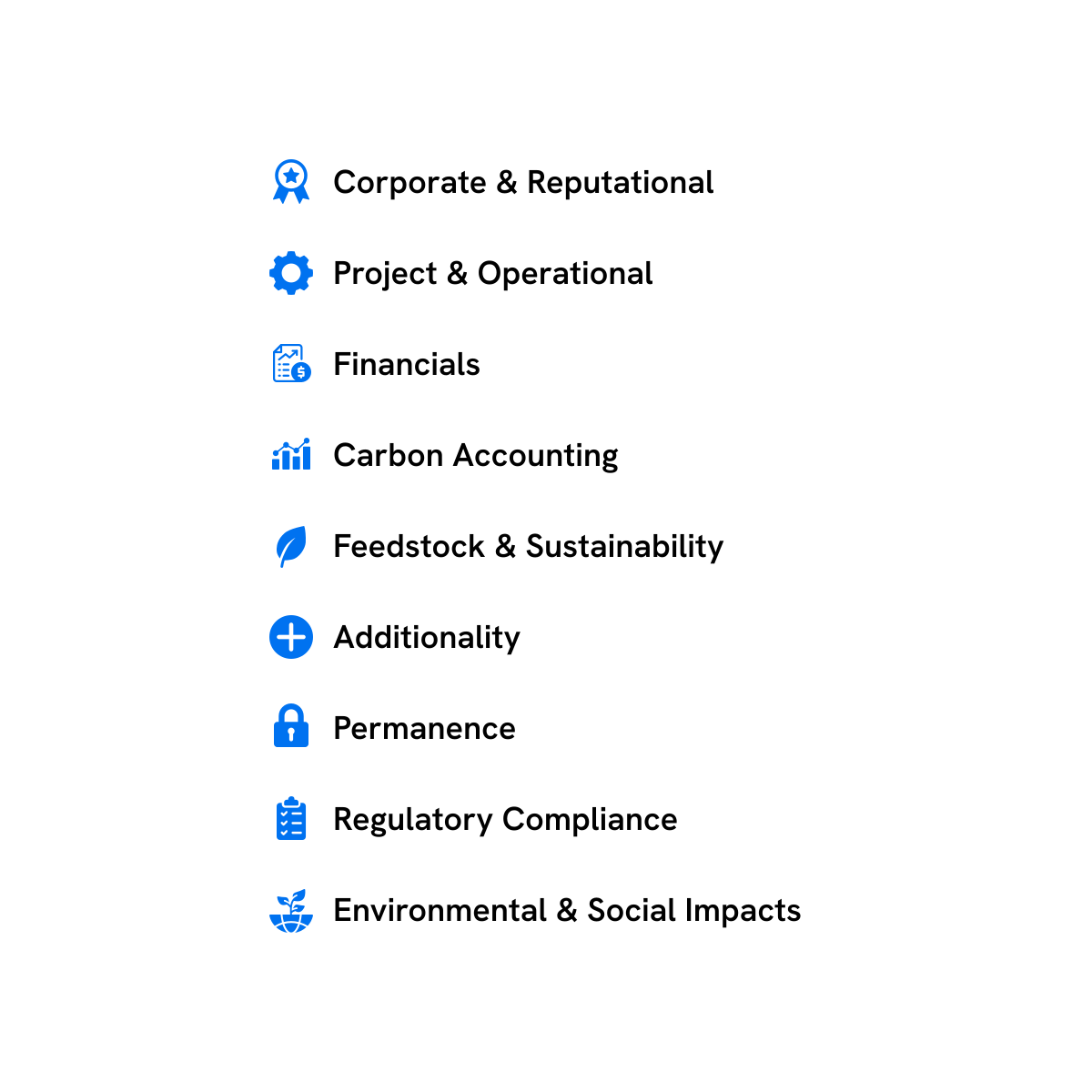
Below are the nine assessment categories used to understand project risks.
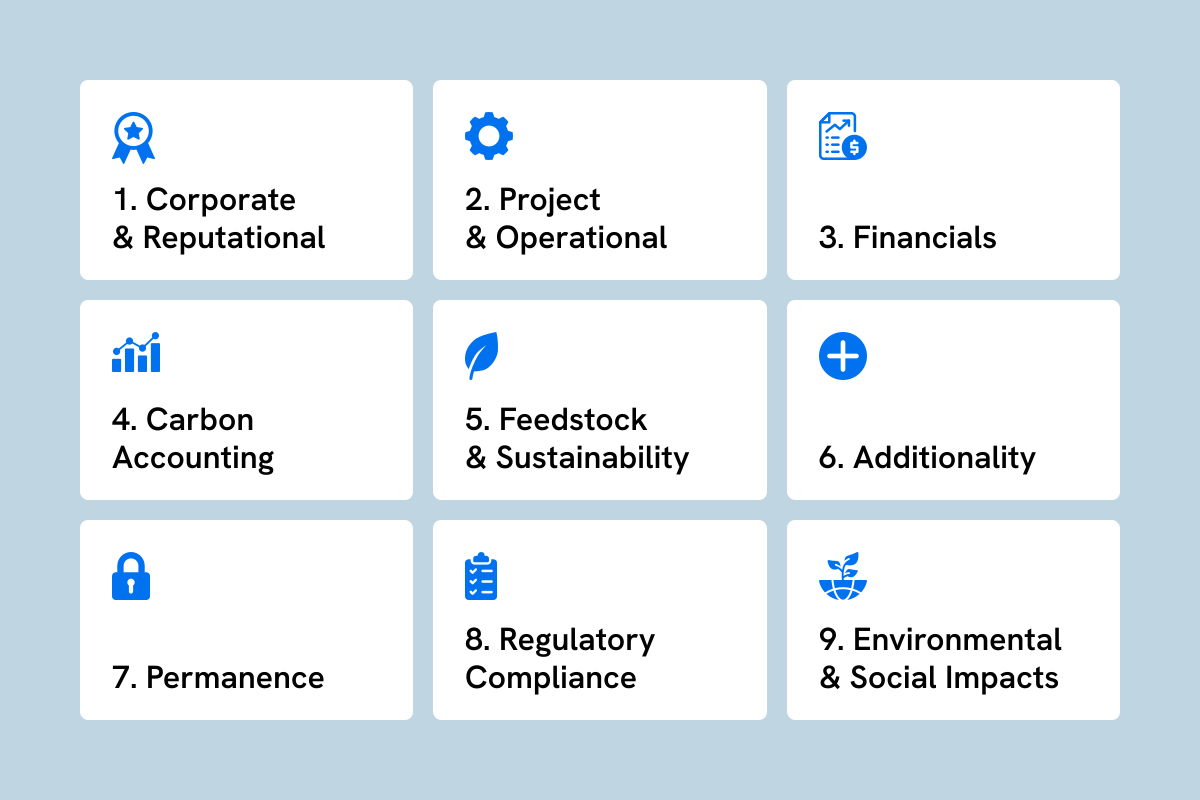
The evaluation includes legal structure, ownership, leadership, and public records. Screening of NGO reports helps identify reputational exposure and high-risk sectors. Track record and team readiness are reviewed to determine whether the organization can deliver a project of similar scope.
This category reviews location, development stage, partners, scale, and operational plans. Capacity, supply chains, technology partners, and offtake arrangements are assessed to determine feasibility and delivery potential.
Financial analysis covers CAPEX and OPEX, funding sources, financial models, and the testing of additionality. Audited statements and sensitivities on key variables provide insight into robustness and resilience. The strength of carbon and co-product offtake agreements is also examined.
Carbon removal methodologies, certification pathways (CSI, Puro.earth, Isometric), and project documentation such as PDDs or LCAs are reviewed. Technology maturity and the ability to accurately measure and report production data are central to evaluating carbon claim reliability.
For biomass-based pathways, assessments look at feedstock type, origin, supply chain integrity, and sustainability compliance. Land-use impacts, deforestation risks, agricultural pressures, and transport logistics are considered to understand the overall environmental footprint.
Baseline scenarios, the alternative fate of the feedstock, the necessity of carbon finance, and public incentives are reviewed to determine whether the project delivers additional carbon removal.
Durability is assessed using accredited laboratory tests (such as H/Corg and heavy-metal analyses) and verified storage approaches for biochar and biogenic CO₂. End-use applications and reversal-risk mitigation measures, including buffer pools, are evaluated.
This includes verification of permits, land ownership or leases, and alignment with emissions and operating regulations. Safeguards against double claiming are reviewed to maintain integrity.
Assessments include community impacts, labor practices, stakeholder engagement processes, and grievance mechanisms. Environmental effects across biodiversity, air, water, and soil are reviewed through EIAs and related documents to ensure adherence to do-no-harm principles.
Each project is asked to provide a set of documents for every due diligence criterion. As an example, you can download the full list of proof documents required for a biochar carbon removal project here.
The information collected across these categories supports a structured evaluation of risk. The risk matrix includes reputational, operational, financial, geopolitical, carbon-performance, permanence, regulatory, and social and environmental dimensions. Together, these help create a clear understanding of a project’s long-term stability and its reliability to deliver carbon removal.
As part of this process, risks are assessed both individually and in combination. Issues such as weak governance, limited operational experience, non-certifiable technologies, high-risk feedstocks, durability uncertainties, regulatory gaps, and social or environmental harms can interact and influence overall project readiness. Their identification informs the final assessment outcome.
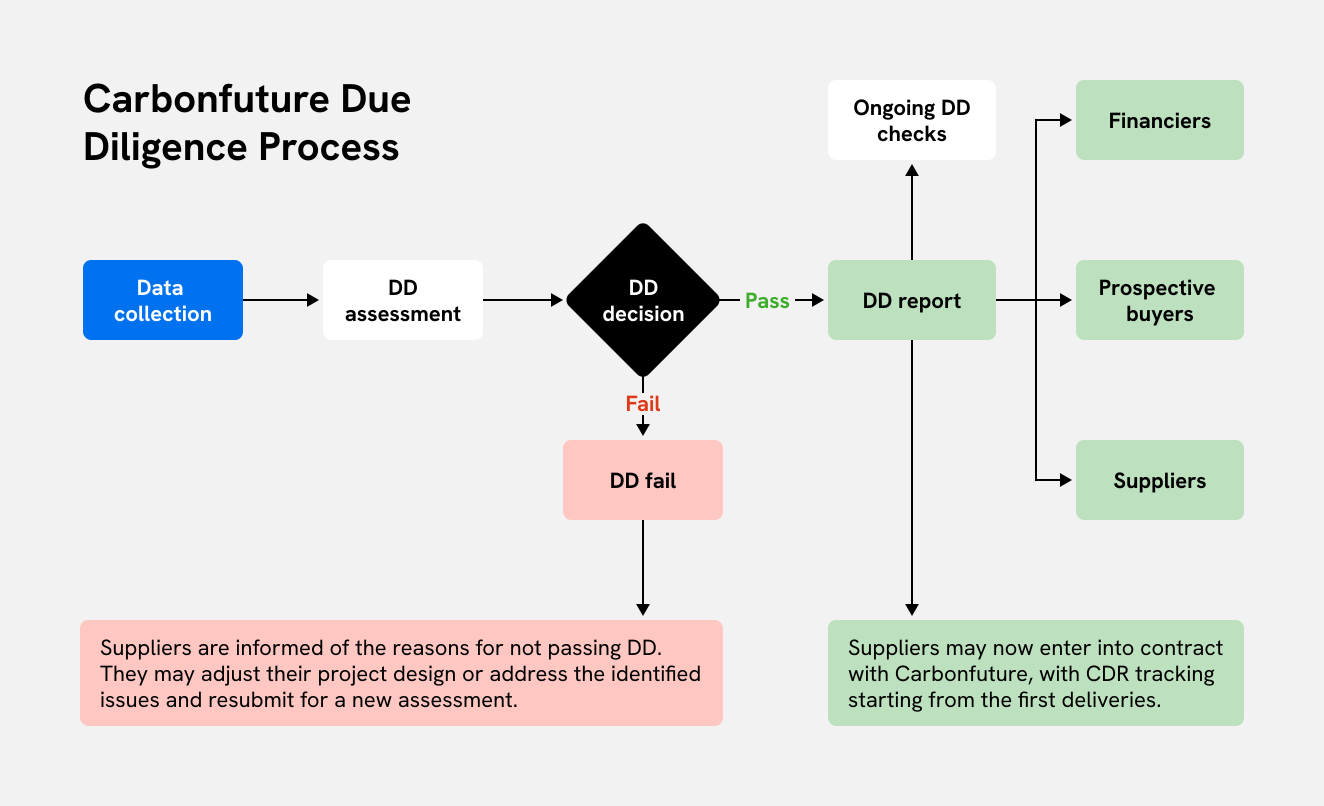
To aid decision-making, the process assigns risk levels to each category and evaluates how different risks may interact. Findings are communicated as a pass, conditional approval, or the need for further evidence. Buyers receive a detailed report summarizing the process and final assessment.
Over the past four years, we have applied this framework to more than 100 carbon removal projects worldwide. These assessments have spanned multiple pathways - including biochar carbon removal (BCR), biomass-based carbon capture and storage (BECCS), direct air capture (DAC), and biomass burial - using a consistent set of criteria while adjusting the depth of analysis to reflect each pathway’s specific risks and maturity.
This accumulated body of real-world evaluation has provided a strong evidence base for refining and strengthening our due diligence approach. Through these reviews, we have been able to identify critical risk drivers early, clarify technical and operational uncertainties, and support projects in improving their readiness for tracking, verification, and eventual certification. Many suppliers have used their due diligence outcomes to demonstrate credibility to buyers and project financiers, helping them progress toward securing buyer contracts and the financing they need to build and expand their projects.
Buyers rely on due diligence to understand the scientific, financial, and operational characteristics of carbon removal projects. This helps them evaluate:
Suppliers benefit from a structured and transparent due diligence process that:
We share clear documentation requirements at the start of the process and provide structured opportunities for clarification and evidence submission.
Due diligence is upstream of project tracking and eventual verification and certification, and it helps suppliers early on to demonstrate readiness and credibility to buyers and investors.
Due diligence provides a structured, evidence-based approach to assessing the readiness and quality of carbon removal projects. By examining scientific foundations, operational capacity, financial resilience, environmental safeguards, and social responsibility, due diligence contributes to the credibility of carbon removal efforts. It supports buyers in making informed decisions and gives suppliers a clear framework aligned with established market expectations.

Buyers


At Carbonfuture, we build trust throughout the carbon removal journey with our rigorous, data-driven approach, ensuring unmatched quality and reliability of carbon removal.